We Deal With
Our Services
Fire Detection, Alarm & Suppression Systems
FIRE HYDRANT SYSTEM
We understand the importance of Safeguarding Lives and Property against the devastating effects of Fires. That’s why we offer top-of-the-line Fire Hydrant Systems, designed to provide Reliable Fire Protection for Residential, Commercial, and Industrial Properties. Our Fire Hydrant Systems are meticulously engineered to meet the Highest Safety Standards and deliver a readily available water supply for Firefighting Purposes. Our Fire Hydrant Systems ensure quick access to a dedicated water supply & deliver high water flow rates, enabling Firefighters to extinguish Fires effectively. Our Fire Hydrant Systems can be seamlessly integrated with other Fire Safety Systems, such as Fire Sprinklers, Fire Alarms, and Smoke Detection Systems. This integration ensures a comprehensive and interconnected Fire Protection Network, Enabling Early Detection, Alerting Occupants, and initiating the appropriate response in case of a Fire Emergency. We provide High-Quality Materials that withstand the test of Time and Harsh Environmental Conditions, ensures that all components are installed correctly and undergo rigorous testing to guarantee their reliability. We understand that every property is unique, and Fire Protection requirements may vary for which Our Team of Experts will work closely with you to design a Fire Hydrant System specific to your needs keeping adherence to the Local Fire Safety Regulations and Standards. Our Expert Team is ready to guide you through the Process, Providing Customized Solutions, Professional Installation, and Ongoing Support.
Ready To Discuss Your Project?
TYPES OF HYDRANT SYSTEMS
Wet Riser Fire Hydrant System
A Wet Riser Fire Hydrant System is a type of fire protection system commonly used in high-rise buildings or large structures. It is designed to provide a continuous pressurized water supply to firefighters for effective fire suppression. The wet riser system comprises a network of pipes always filled with water, allowing immediate access to water when needed. These systems must comply with local fire safety codes and regulations, which may include requirements for system design, installation, flow rates, and accessibility. Here’s how a wet riser fire hydrant system typically works:
1. Water Source: The system is connected to a reliable water source, such as a dedicated water tank or the municipal water supply. The water source must have sufficient capacity to meet the demands of firefighting operations.
2. Riser Pipes: The system includes vertical riser pipes that run throughout the building, usually in stairwells or dedicated riser shafts. These riser pipes are filled with water under pressure and are connected to the water source.
3. Hydrants and Landing Valves: At designated intervals, the riser pipes are equipped with fire hydrants or landing valves. These fixtures provide access points for firefighters to connect their hoses.
4. Pressure Control & Water Distribution: The wet riser system incorporates pressure control devices to maintain adequate water pressure throughout the system. Once the hoses are connected, water flows from the wet riser system through the hoses to the firefighting area.
5. Fire Hose Connections: When a fire occurs, firefighters connect their hoses to the hydrants or landing valves to access the pressurized water supply. The hoses are typically stored in cabinets or hose reels located on each floor, ensuring quick deployment.
TYPES OF HYDRANT SYSTEMS
Valve
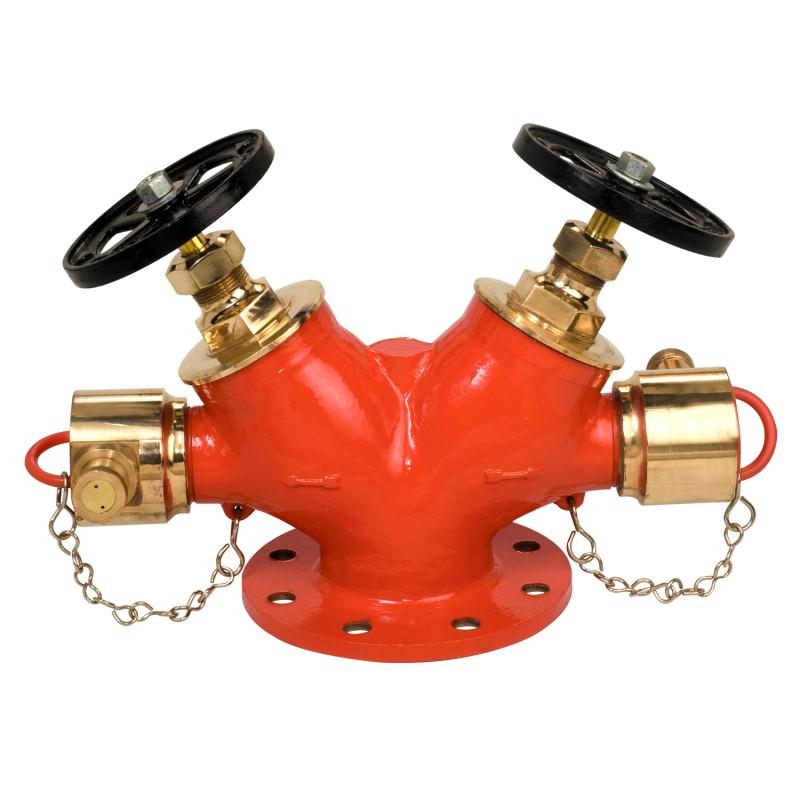
(1) Hydrant valves are commonly referred to as landing valves or millcocks. Hydrant valves provide a standardised connection and are installed on fire service pipelines from a reliable water source to control the flow of water, the supply of which is to be utilised for fire fighting purposes.
TYPES OF HYDRANT SYSTEMS
Fire Hoses & Couplings
(1) Fire Hoses used for suction and delivery/supply. The suction (or intake) use of fire hose allows the fire department’s pumper to connect to the necessary source. Once the fire hose in connected, it can be used to deliver/supply water to the area that’s on fire. (2) A hose coupling is a type of fitting located on the end of the fire hose, which is typically made of steel, brass, or aluminum. The coupling has threading on each end, one female end and one male end, allowing the hose to connect with another hose, tap, or other water source.
TYPES OF HYDRANT SYSTEMS
Branch Pipe & Nozzles
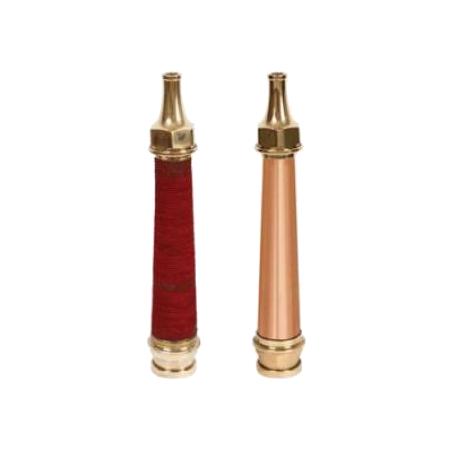
Branch Pipe means any pipe conveying soil-water or waste-water either separately or together to a stack or other vertical pipe
TYPES OF HYDRANT SYSTEMS
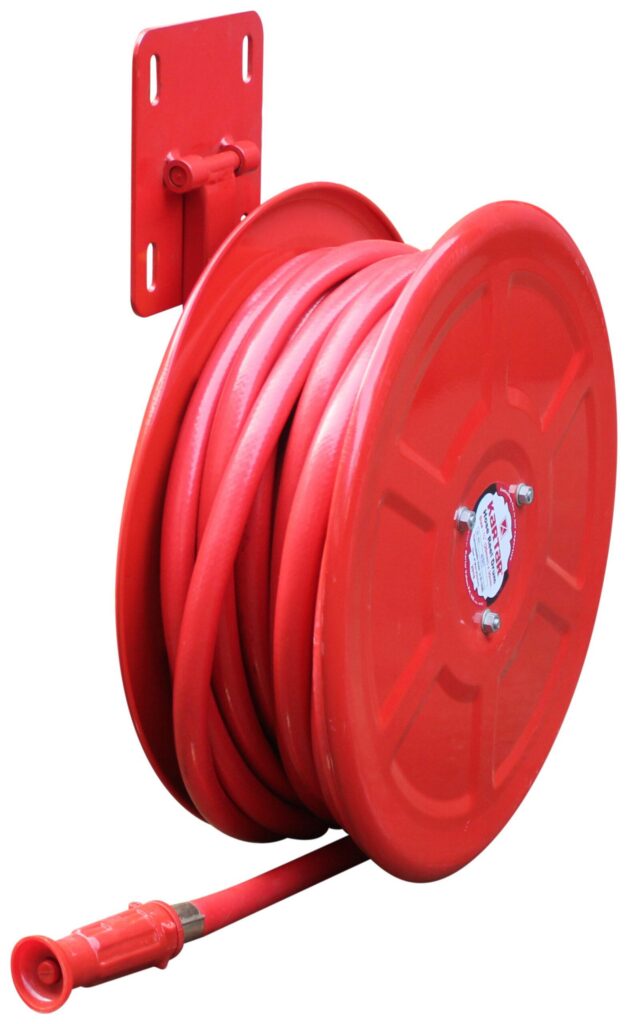
Hose Reel Drum
The circular drums are utilized across the industrial and commercial area for hassle free storing and pulling out of hose reels during fire suppression.
TYPES OF HYDRANT SYSTEMS
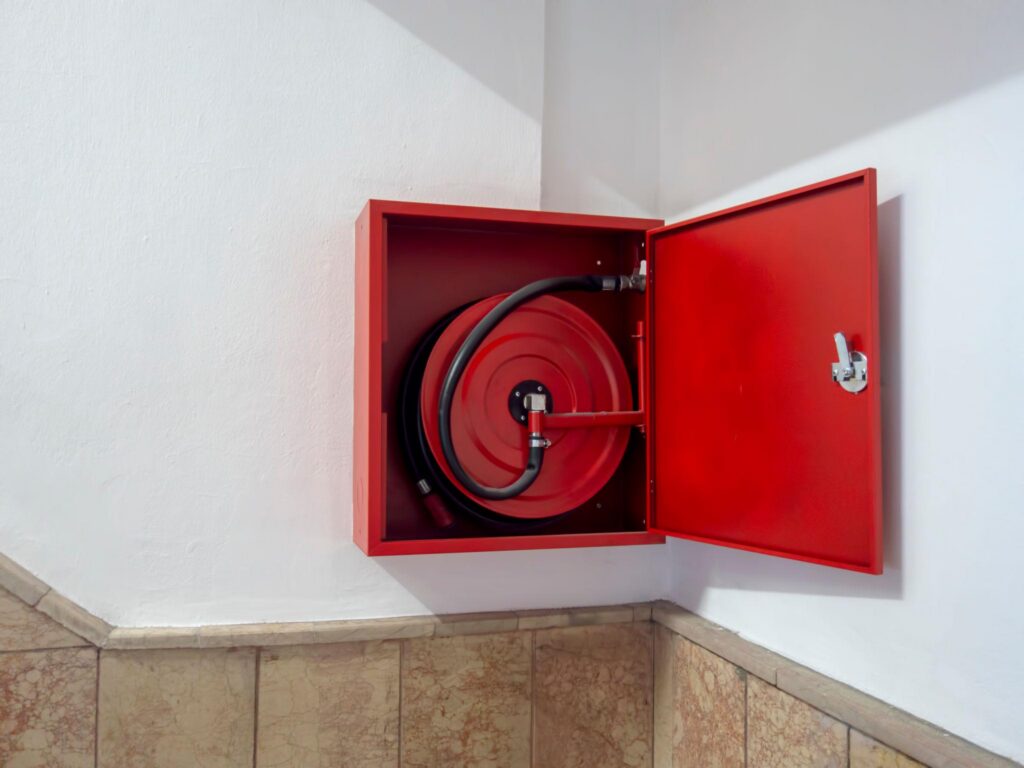
Hose Box
Hose Boxes are used to store the firefighting equipment like Fire Hoses, Fire Extinguishers, Fire Hose Reels, Branch Pipes etc. These cabinets provide best protection from the environmental damage to the fire equipment.
TYPES OF HYDRANT SYSTEMS
Pump
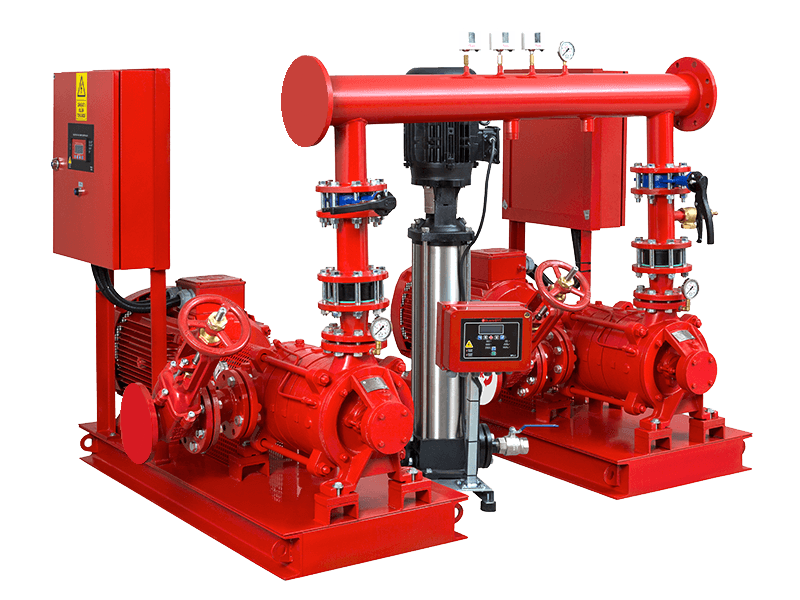
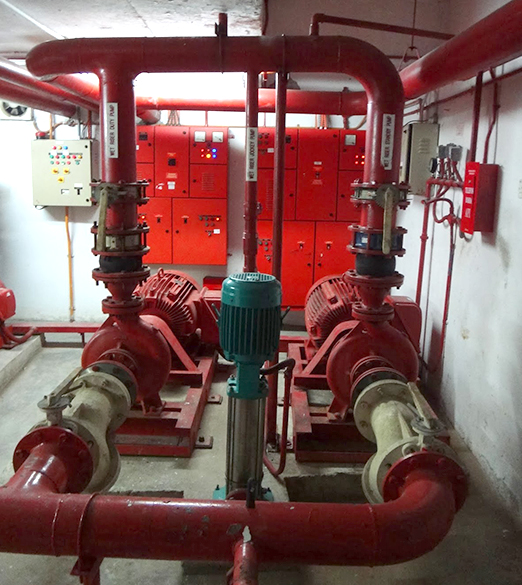
(1) Fire Hydrant Pump systems (also known as fire pumps, hydrant boosters, or fire water pumps) are used to increase a building’s fire fighting capacity by increasing the pressure in the hydrant service when the mains pressure is insufficient or the hydrant is tank fed.